

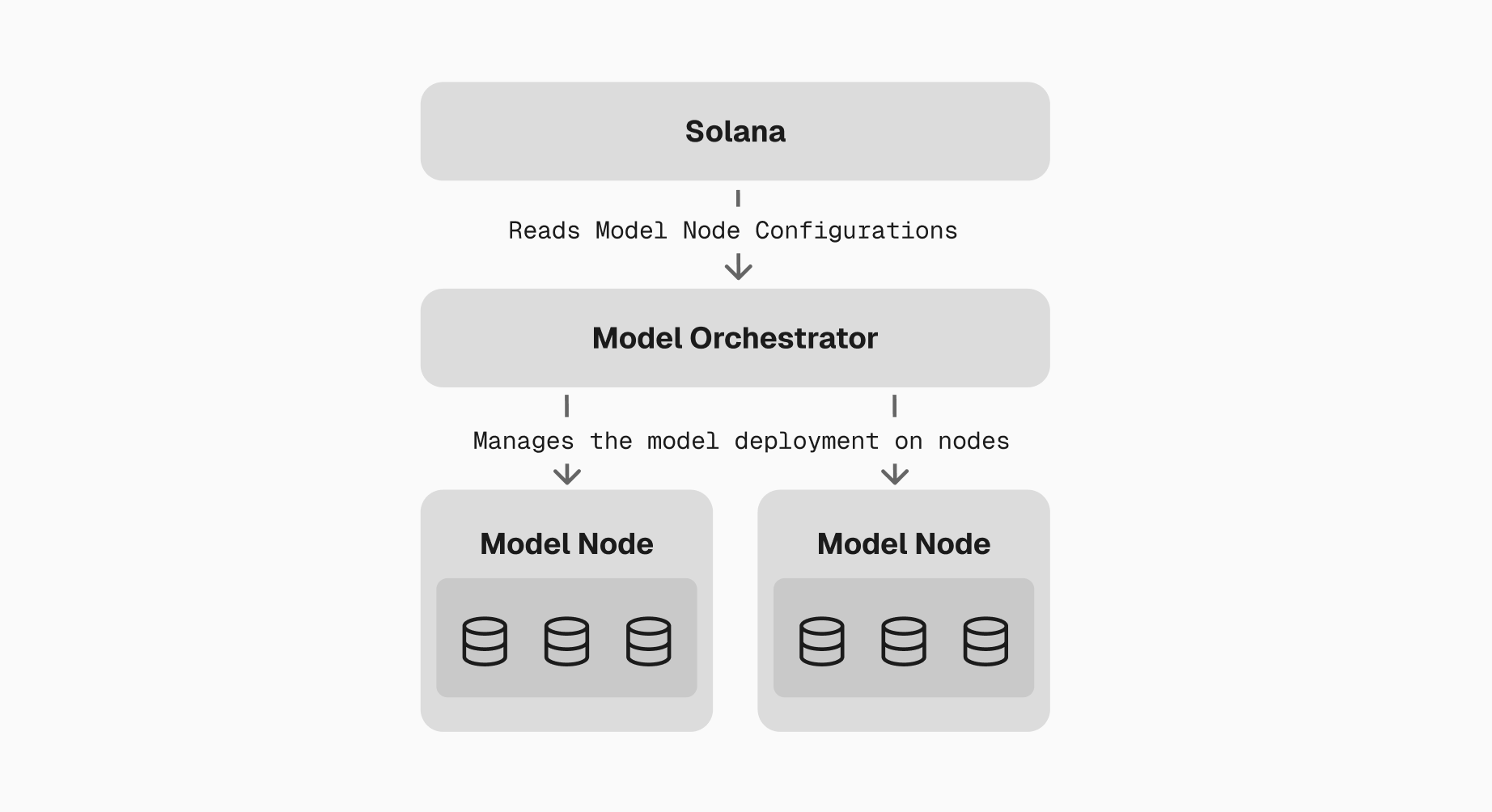
Model Orchestrator managing model containers
What it does
The Orchestrator:- Starts and stops model containers based on on-chain authorizations
- Ensures one running instance per model — restarts containers if they crash
- Verifies ownership and permissions by reading the blockchain (in production)
- Exposes a gRPC endpoint so the Coordinator’s Model Runner Client can discover and connect to models
Running locally
The Orchestrator runs as part of your local development stack (viamake deploy), letting you
simulate a full Model Node on your machine and validate an end-to-end flow before going to
production.
The Coordinator Platform at http://localhost:3000 provides a UI for submitting and managing local
test models — so you can test the complete loop without deploying anything to the blockchain.
Next: Access control
How the Secure Model Protocol authenticates communication between Coordinators and Model Runners.