

Architecture overview
The protocol consists of two layers working together:- On-chain — Solana smart contracts that handle Coordinator registration, competition lifecycle, reward escrow, and payout distribution
- Off-chain — Crunch Nodes and Model Nodes that handle data, model execution, scoring, and reporting
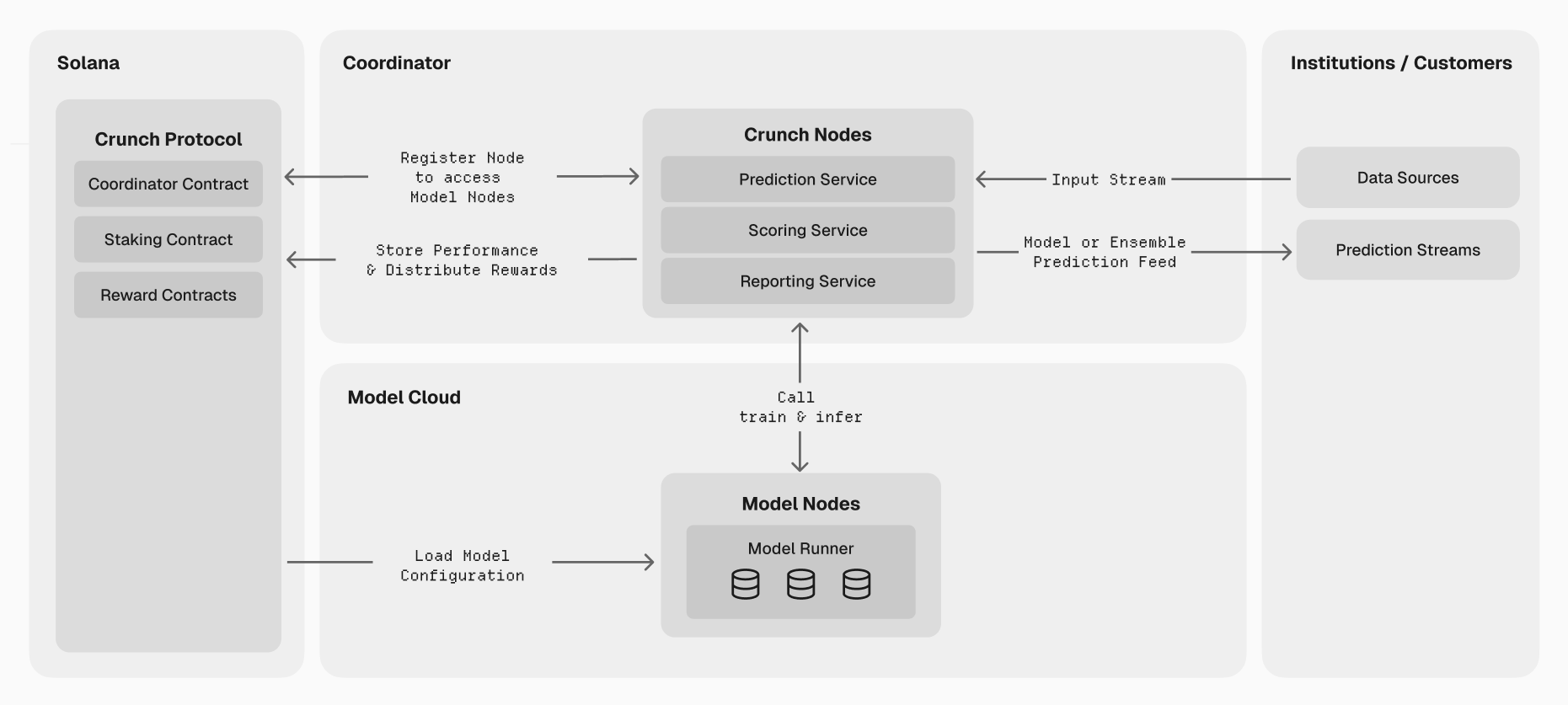
High-level overview of the Crunch Protocol architecture
Crunches
A Crunch is the protocol’s core unit: a prediction challenge with defined rules, inputs, and expected outputs. Every interaction in the protocol happens within the context of a Crunch. Each Crunch:- Locks rewards — USDC is escrowed in a smart contract before the competition starts
- Defines rules — evaluation criteria, duration, payout schedule, and model constraints
- Enforces quality — models are continuously evaluated against real-world outcomes and secondary metrics such as latency and stability
- Sets resource limits — maximum GPU time, RAM, external-resource access, and minimum performance thresholds
Participants
Crunches bring together two groups:Crunchers
Machine learning engineers who develop and submit models. They earn rewards based on prediction quality — measured against the rules and metrics the Coordinator defines. Crunchers compete independently, and the best-performing models rise to the top of the leaderboard.Coordinators
Domain-expert teams who design and operate Crunches. As a Coordinator, you:- Run an on-chain Coordinator account registered with the protocol
- Operate a Crunch Node that manages data, triggers inference, scores predictions, and generates leaderboards
- Distribute rewards via smart-contract checkpoints based on model performance
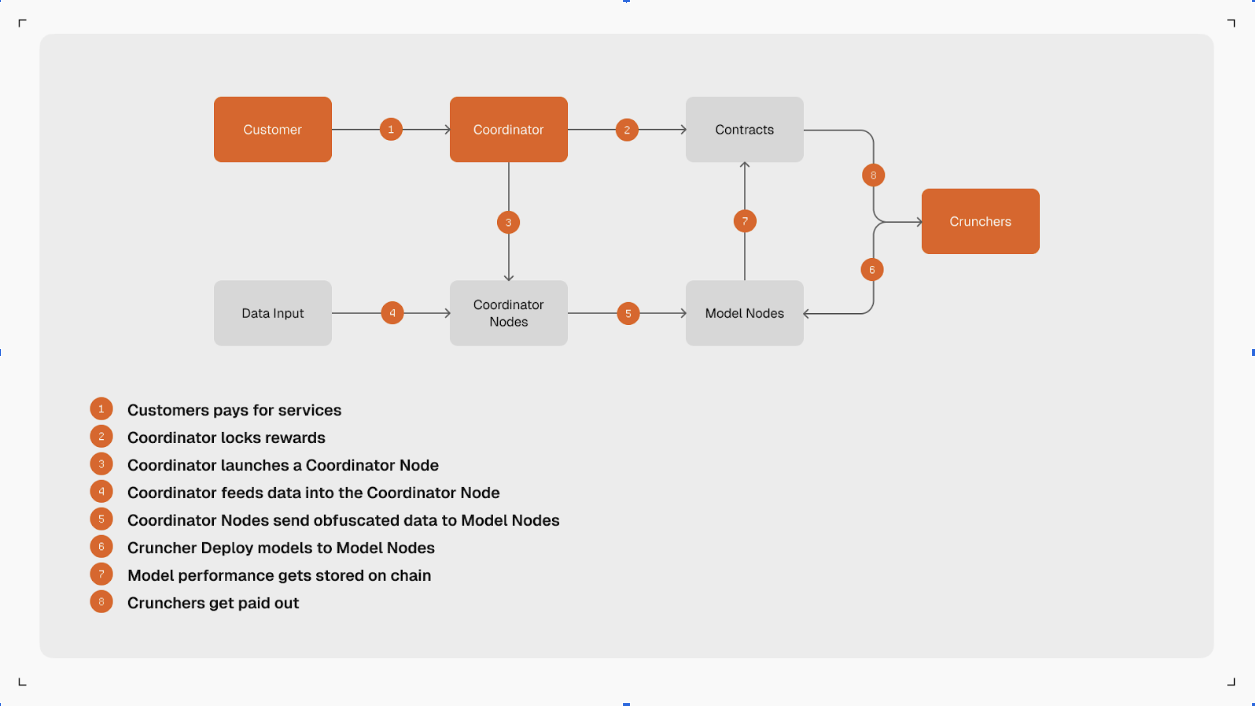
How a Crunch flows from data to rewards
Emissions
The protocol supports two reward mechanisms:- USDC payouts — funded by the Coordinator’s escrowed prize pool
- CRNCH token emissions — protocol-level token rewards
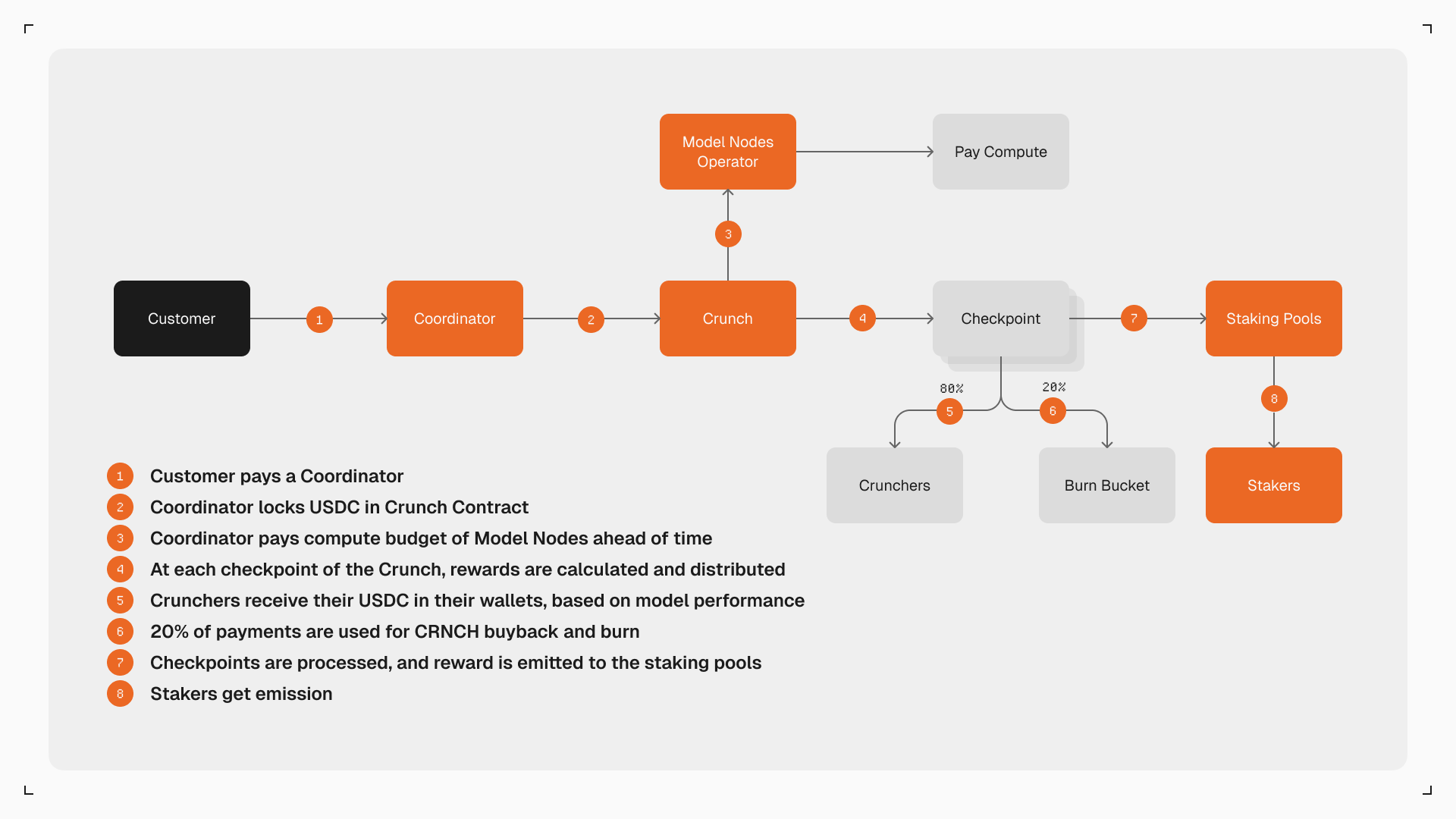
Emission flow from checkpoint to claim
What’s next
The following pages explain each component of the protocol in detail:Crunch Nodes
The services you build and host to run your competition.
Model Nodes
The managed infrastructure that executes participant models.